Fabric identification
Photograph labels and report missing care information. Leather, coated fabrics, velvet and woven cloth need different consideration. Do not assume every chair in the room suits the same method.

FOR YOUR PREMISES
Care for shared seating
Plan a clean for seating that sees frequent use. Send fabric labels, the furniture count and photographs of marks, then arrange alternative seats while the agreed items dry.
THE RIGHT BRIEF
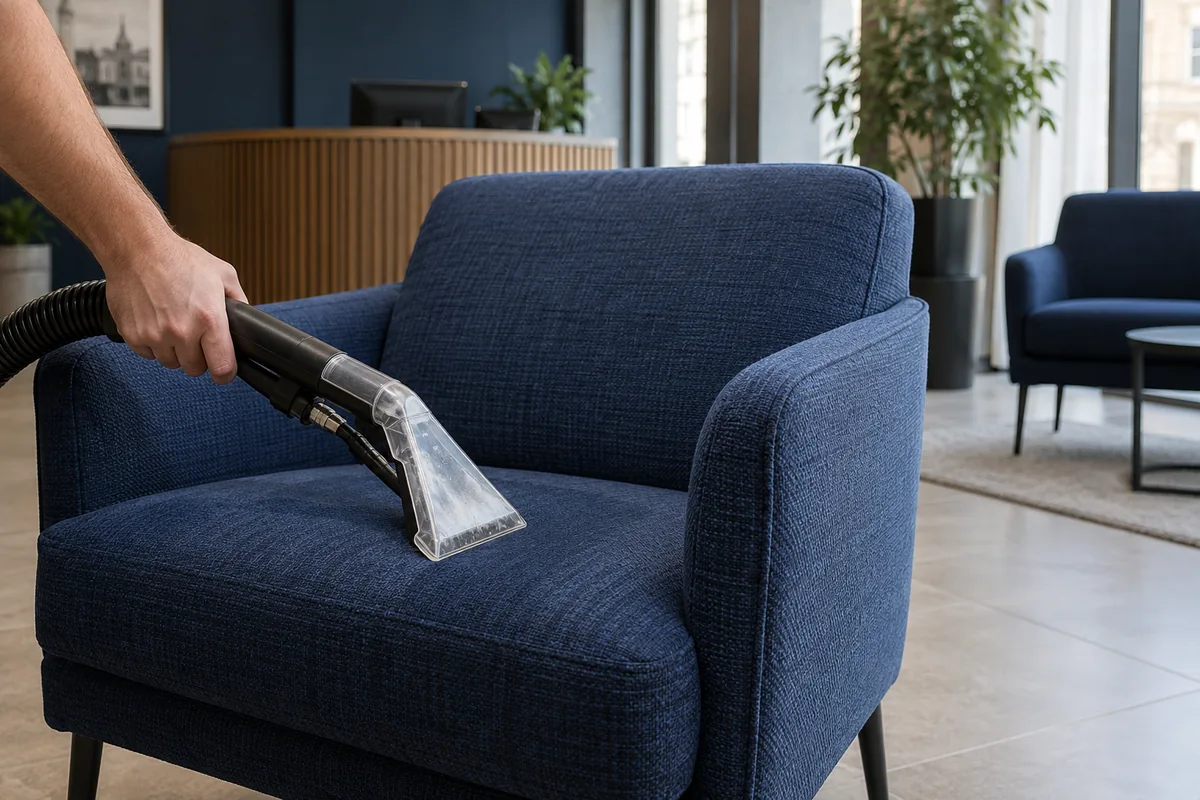
Reception sofas, meeting chairs and breakout seats see frequent use. Photograph care labels and report missing labels. Leather, coated fabrics, velvet and woven cloth do not all suit the same approach. Describe spills, previous treatments and loose seams. A stain may have permanently changed the fabric colour, and cleaning cannot reverse that damage.
PLAN THE WORK
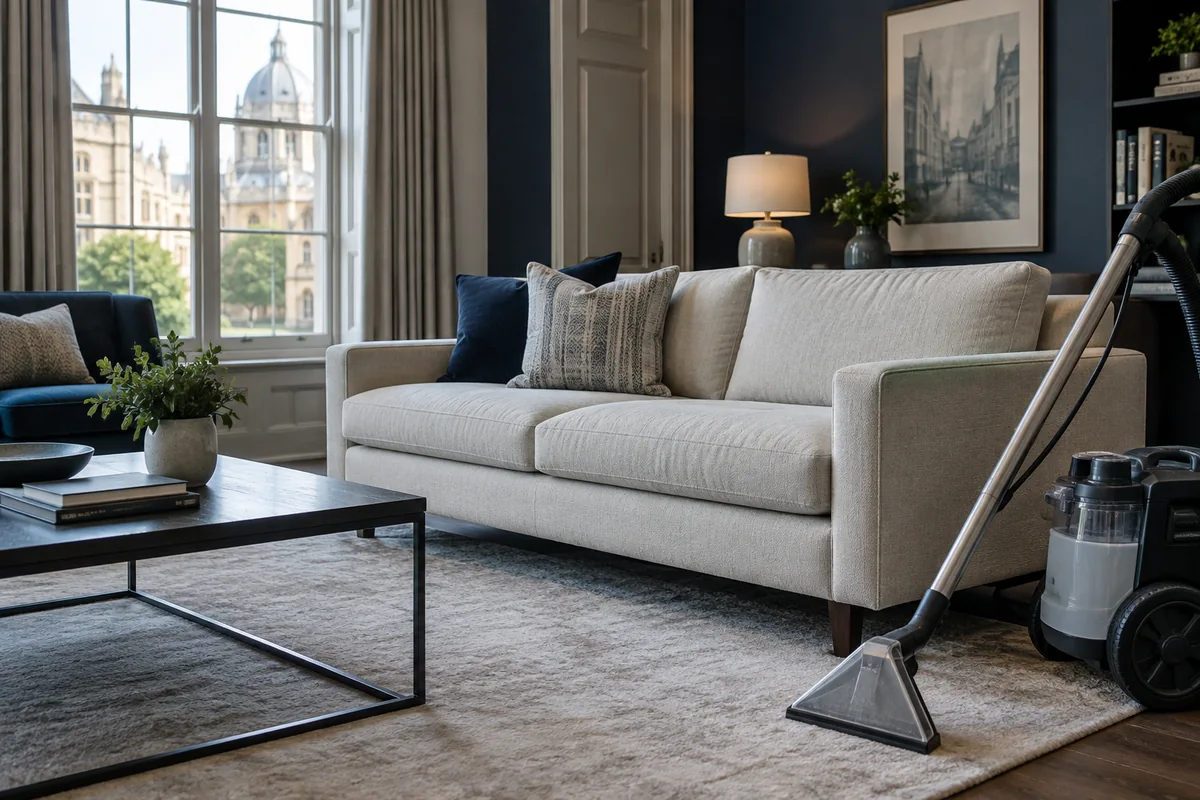
Use fabric labels, marks, furniture counts and drying arrangements to plan the seating clean. Fixed benches and removable cushions need separate descriptions.
Photograph labels and report missing care information. Leather, coated fabrics, velvet and woven cloth need different consideration. Do not assume every chair in the room suits the same method.
Describe spills, previous treatments and worn seams. Arms and seat edges often show concentrated soil. Some marks are permanent colour change or damage, which cleaning cannot reverse.
Count chairs, sofas, fixed benches and loose cushions separately. Photographs show shapes and fixed sections. Confirm whether backs, arms and other accessible surfaces are included in the quotation.
Arrange alternative seating and allow ventilation. Ask about return to use before booking the next meeting. Do not replace covers on damp material; explain any constraint that prevents seats being taken out of service.
HOW IT WORKS
Count the seating and photograph materials and care labels.
Review which items can be treated and any marks needing assessment.
Keep treated seats out of use for the advised period.

BEFORE THE VISIT
Count chairs, sofas, benches and loose cushions accurately. Photographs help explain fixed cushions and awkward shapes. Confirm which backs, arms and other surfaces are included. Arrange alternative seating while upholstery dries, and avoid replacing covers on damp material. If furniture cannot be taken out of use, explain that constraint before booking so a workable plan can be discussed.
PRICES & QUOTATIONS
List chairs and sofas by type, material and quantity. Photographs of care labels and marks help explain the work. Check furniture movement and drying arrangements, especially if the seating must be available for the next shift. Coordinate nearby floor treatment with furniture access and alternative seating. See commercial carpet cleaning.
Request a quote ↗Call +44 1865 519751 ↗RELATED SERVICES
Discuss a separate detailed clean outside the ordinary routine.
Explore routine cleaning for workstations and shared facilities.
Explore all services ↗LOCAL CLEANING ENQUIRIES
Cleaning enquiries in Oxford
YOUR ADDRESS
For commercial upholstery cleaning at an Oxford address, give the full postcode and the fabric identification details described above. For a property elsewhere in Oxfordshire, check coverage before arranging access.
Explain access to drying arrangements, including any site restrictions.
Home, rental & workplace enquiries
Ask us to confirm your postcode
GOOD TO KNOW
Questions about fabric identification, everyday marks.
Send a photograph of the furniture and care label, plus manufacturer details if available. Tell the team when a label is missing or a fabric has been treated previously.
List sofas, chairs, benches and loose cushions separately, with photographs. Fixed cushions and unusual shapes can affect the work, so a simple seat total may not be enough.
Plan alternative seating until the agreed drying guidance has been followed. Material, method and ventilation affect the time; confirm this before scheduling the room.
TELL US ABOUT YOUR PROPERTY
Share your postcode, priorities and preferred date.
Discuss your clean ↗Call +44 1865 519751 ↗