Fabric and lining
Share labels and care information. Mention velvet, blackout layers, interlining and decorative trims, including any material different from the face fabric.

SPECIALIST CLEANING · OXFORD
Make fabric and fittings part of the plan.
Curtains gather dust along folds and can contain different materials in the face, lining and headings. Share their label, size and fittings before booking. Cleaning, removal and drying should suit the actual pair, particularly with lined, interlined or unusually tall curtains.
START WITH THE DETAILS
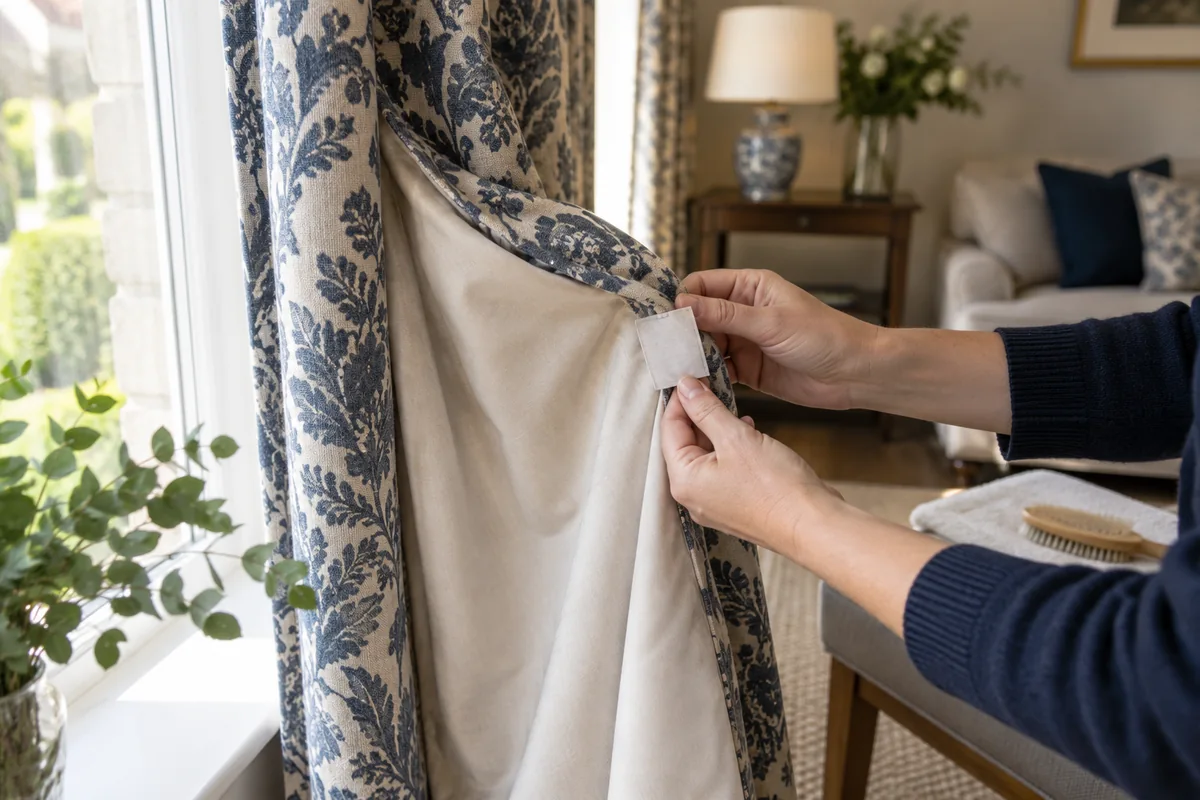
Light washable curtains differ greatly from heavy interlined pairs. Fabric, lining and trims may respond differently to moisture or heat. Manufacturer instructions matter; an older pair may have weakened along a sun-exposed edge. Photograph the label, full drop and faded or damaged areas. Describe blackout coatings and any replacement lining rather than relying on the appearance of the face fabric.
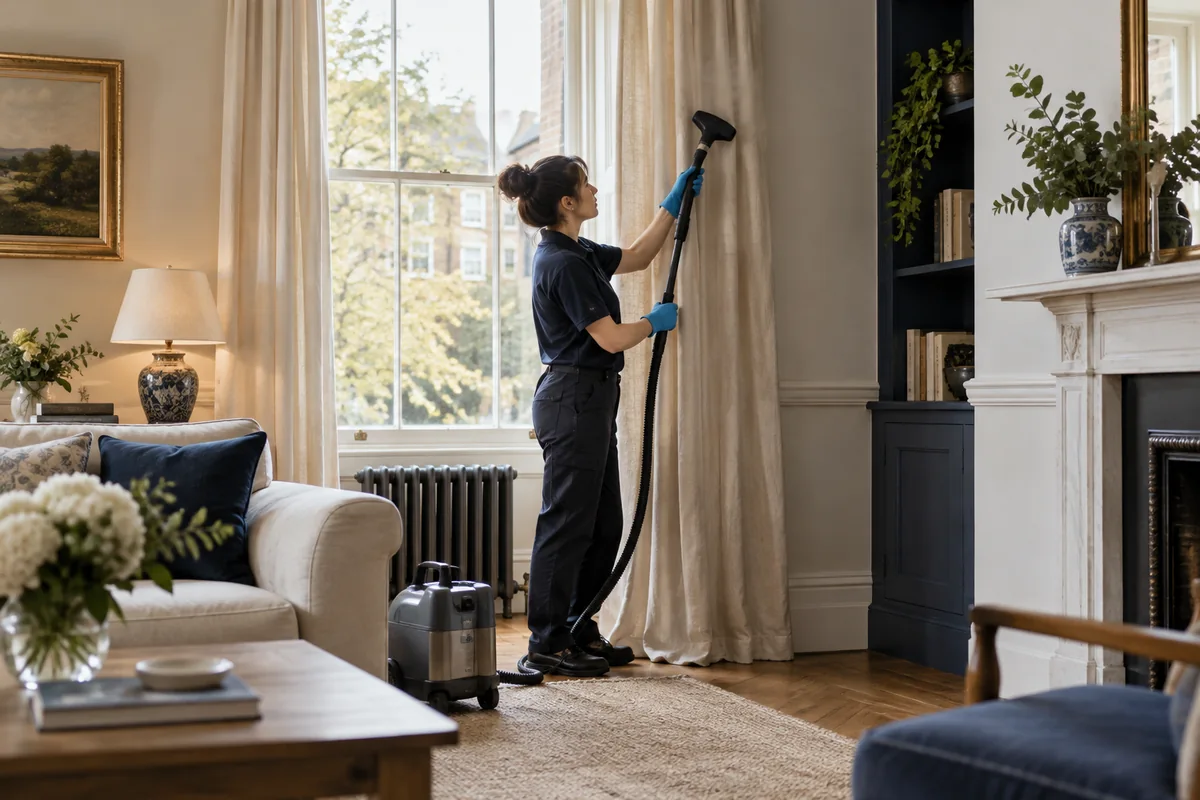
Explain how the curtains hang: poles, tracks, eyelets, hooks and pelmets affect handling. High ceilings and bay windows need access planning. Ask whether the proposed work happens while curtains hang or whether removal is needed. Neither arrangement should be assumed from the service name. Cleaning cannot restore faded dyes or repair a torn lining.
PLAN THE WORK
Measurements and fittings help establish the work. Ask the quote to confirm treatment, removal and rehanging where relevant, so the practical parts are as clear as the fabric care.
Share labels and care information. Mention velvet, blackout layers, interlining and decorative trims, including any material different from the face fabric.
Provide panel count, width and drop. List separate panels in bay windows and explain whether sheers or other layers are requested.
Describe poles, hooks, eyelets and pelmets. Include access height and any fittings that are fragile, loose or difficult to operate.
Identify stains and odours along with sun damage or weak fabric. Their location and cause help separate cleaning concerns from repair needs.
HOW IT WORKS
Labels, lining and exposed-edge condition help establish suitability. A delicate border can impose different limits from the main fabric. Explain previous cleaning or alterations.
Ask whether removal, transport, treatment in place and rehanging form part of the proposal. Confirm handling of hooks and how each panel is identified.
Discuss drying and when the curtains can close again. Consider privacy while they are away or drying. Do not fold or rehung damp fabric without appropriate guidance.

BEFORE THE VISIT
Move small furniture and ornaments away from the window. Leave curtains fitted until arrangements are clear; heavy pairs are awkward and hooks can be lost. Photograph headings and fittings so the enquiry shows the handling involved. Do not climb to a high track simply to prepare a label photo.
Record which pair belongs to each window, especially where several look alike. Flag fragile rails, cords and sun-weakened edges. Avoid applying fragrance or household spray to disguise an odour before it is assessed. Keep known care instructions with the photographs.
For several rooms, label your photos with the window location. Record which panels form a pair and whether there are separate sheers behind them. This helps keep a large enquiry understandable and reduces confusion around panels that have similar colours but different linings.
Tell the team about earlier alterations or cleaning. A shortened pair may have a different hem construction, while replacement lining may carry separate instructions. If a previous treatment caused shrinkage or a change in colour, include that history rather than presenting the curtains as unchanged.
If the room needs privacy throughout the work, mention this at the start. Agree a practical plan for the window rather than relying on the curtains being ready immediately.
PRICES & QUOTATIONS
Send panel count, measurements, lining type and fitting photos. A tall interlined pair requires different handling from a short unlined curtain. Access height, large furniture and decorative features can affect the scope; window count alone gives too little information.
Ask removal, transport and rehanging to be itemised where relevant. Confirm pelmets, tiebacks and separate sheers. Explain any manufacturer restrictions so the quote describes suitable work and makes clear which parts of the window dressing remain outside it.
Request a quote ↗Call +44 1865 519751 ↗RELATED SERVICES
For other types of window coverings.
For fabric furnishings in the same room.
For accessible surfaces around the windows.
Explore all services ↗LOCAL CLEANING ENQUIRIES
Cleaning enquiries in Oxford
YOUR ADDRESS
For curtain care in Oxford, share postcode, window details and preferred date. Mention high access, parking and building entry. If your address is elsewhere in Oxfordshire, confirm coverage and handling arrangements before taking anything down or arranging temporary window coverings.
Home, rental & workplace enquiries
Ask us to confirm your postcode
GOOD TO KNOW
Questions about fabric and lining, pairs and drops.
Ask which arrangement is proposed for the material and lining. Access and treatment influence suitability. Confirm this before removing panels from a track or pole.
Send the label and lining photos. Blackout coatings have care limits and may deteriorate with age. Suitability should be assessed from construction, not the face fabric alone.
Ask for removal and rehanging in the quote. Include height, fittings and heavy panels. Confirm who handles hooks and tracks before the appointment.
Fading changes the dye and is not ordinary dirt. Cleaning cannot restore the original colour or repair weakened fabric. Photograph those areas to distinguish them from dust.
Give width, drop and panel count for each window. Include sheers, tiebacks and pelmets where requested. These details are more useful than simply counting windows.
TELL US ABOUT YOUR PROPERTY
Share your postcode, priorities and preferred date.
Discuss your clean ↗Call +44 1865 519751 ↗